

Market Reality, Power Structures, and the Future of Payments
Executive Summary
Stripe’s dominance in online payments is often misunderstood as a technology advantage. In reality, Stripe’s strength lies in distribution, default trust, and timing—owning the first payment decision rather than the entire market. While Stripe controls developer mindshare and early-stage onboarding, the majority of global payment volume still flows through traditional processors, ISOs, and gateways. As card-not-present transactions continue to grow and AI compresses onboarding and risk advantages, the next phase of competition will not be about replacing Stripe, but about owning complexity, context, and payment intelligence beyond simple authorization.
The Question Many Payment Operators Quietly Ask
Why is it so difficult to compete with Stripe?
From direct experience operating payment systems, it is clear that merchant onboarding does not inherently require days. In many cases, accounts can be underwritten and activated in 24 hours or less—sometimes faster.
Yet when Stripe takes two or three days, merchants interpret this as safety and diligence. When smaller processors move faster, the same speed is often interpreted as risk.
This asymmetry reveals something important: the challenge is not technological.
It Is Not the Technology
Stripe is not using inaccessible or proprietary technology.
Modern payment stacks—cloud infrastructure, APIs, compliance tooling, fraud services—are widely available. Many processors and gateways match or exceed Stripe’s capabilities in flexibility, speed, and real-world adaptability.
The difference is not engineering sophistication.
It is how trust is distributed at scale.
Default Trust Is Stripe’s Real Moat
Stripe does not merely process payments—it processes confidence.
Delays are interpreted as rigor.
Friction is interpreted as safety.
This perception only works at scale. Smaller operators do not receive the same benefit of the doubt, even when their underwriting is more precise or their support more responsive.
Scale forgives friction.
Speed without reputation is punished.
Distribution Beats Excellence
Stripe’s defining advantage is not processing—it is placement.
Stripe appears:
- At the moment developers first need payments
- Inside tutorials, documentation, platforms, and frameworks
- Before merchants understand what tradeoffs they are making
By the time a business evaluates alternatives, Stripe is already embedded. Everyone else competes as a replacement, not a default.
This single advantage explains much of the market imbalance.
Market Reality: Stripe Is Not the Whole Market
Stripe feels dominant because it controls mindshare, especially in:
- SaaS
- Marketplaces
- Platforms
- Venture-backed startups
But globally:
- Stripe processes roughly ~20% of online payment volume
- Traditional processors and ISOs collectively process the majority of global card volume
- Retail, healthcare, hospitality, automotive, and professional services remain largely outside Stripe’s core focus
Stripe owns the entry point.
Others operate the backbone.
Why Industry Coalitions Rarely Succeed
The idea of processors and gateways forming a coalition to challenge Stripe is appealing—but structurally flawed.
Coalitions struggle with:
- Conflicting incentives
- Divergent risk models
- Fragmented branding
- Committee-driven decision making
- No single owner of the end-to-end experience
Platforms win because they are opinionated.
Stripe succeeds because it controls the surface area.
Card-Not-Present Is Now the Default

4
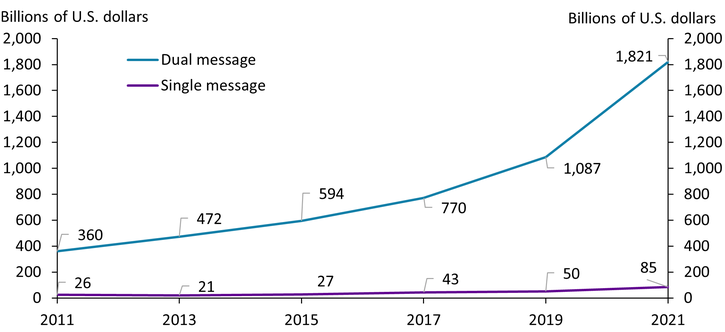
Payment behavior has fundamentally shifted:
- Card-not-present transactions now represent the majority of transaction count
- Most new businesses are online-first or hybrid
- In-store payments increasingly originate from online intent (links, invoices, QR, subscriptions)
- Payments are no longer an isolated event—they are part of continuous software workflows
This shift favors platforms, not standalone processors.
AI Will Change Payments—But Not by Replacing Companies
Artificial intelligence will not replace payment companies.
It will remove their worst friction.
AI will rapidly compress:
- Merchant onboarding
- Document verification
- Risk scoring
- Fraud detection
- Chargeback analysis
As these capabilities normalize, onboarding speed will cease to be a differentiator.
What AI will not replace is context.
Where the Value Is Actually Moving
Authorization and settlement are becoming commodities.
Value is moving upward into:
- Intent-aware money movement
- Multi-rail decisioning (card, ACH, wallets, RTP)
- Workflow-aware reconciliation
- Post-transaction intelligence
- Regulatory and accounting alignment
Stripe excels at abstraction:
“Here is an API. Do not think about payments.”
The next generation of platforms must excel at understanding:
“Why does this transaction exist at all?”
What This Means for the Rest of the Industry
For ISOs
- Stop trying to look like Stripe
- Embrace human underwriting and vertical expertise
- Own complexity Stripe cannot profitably support
- Treat speed + context as a premium service, not a liability
For Gateways
- Move beyond pass-through transaction routing
- Become orchestration and resilience layers
- Gateways that understand intent will outlive those that only move data
For Platform Builders
- Payments are infrastructure, not features
- Control the workflow and payments become strategic leverage
- Embedded finance beats generic integrations every time
Final Thought
This is not a market of:
- Stripe
- And crumbs
It is a market of:
- Stripe as the default abstraction layer
- Everyone else as the problem-solvers
Stripe owns the front door.
Others increasingly own the house.
As AI flattens onboarding and risk, context, accountability, and customization become the real moat.
That is not a consolation prize.
That is where the future of payments is being built.


 Kourosh
